April 23, 2026
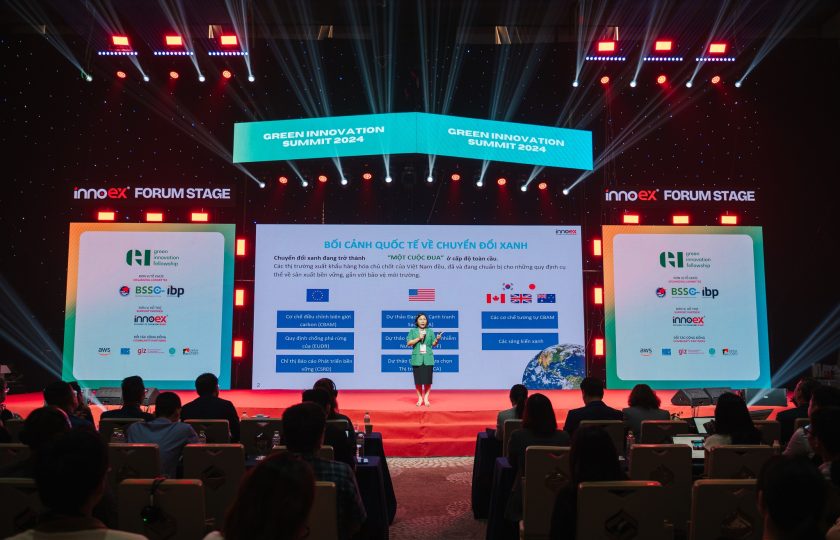
Ho Chi Minh City, April 22, 2026 – The Innovation Insiders #3, a strategic forum combining executive dialogue with hands-on solution experience themed “Innovating How Business Really Works,” concluded successfully today with more than 500 business leaders in attendance, including CEOs, COOs, CFOs, CHROs, and heads of operations. Co-organized by InnoEx and Grab For Business, the forum centered on a single urgent question: how must Vietnamese businesses reinvent the way they operate to remain competitive in a fundamentally changed economic landscape?
When Growth No Longer Guarantees Profitability
In a market shaped by rising costs and mounting competitive pressure, many businesses are confronting a troubling paradox: revenue is growing, but operational efficiency is not keeping pace. This challenge is especially acute for Vietnam’s SME sector – which accounts for 97–98% of all active businesses – where constraints in resources, technology and management capability are widening the gap between top-line growth and bottom-line results.
The Innovation Insiders #3 was designed as a candid exchange where business leaders could look squarely at their operational “bottlenecks” – from bloated processes and fragmented data to hidden costs accumulating through everyday friction – and explore new approaches to address them.
Ms. Truong Ly Hoang Phi, Chairwoman & CEO of InnoEx and IBP (Investment and Business Partners Joint Stock Company), delivered the opening address, painting a clear picture of the scale and urgency of this moment. Vietnam is working toward a target of 2 million active businesses by 2030 and 5 million by 2045, alongside rapid growth in innovation-driven startups and new business entities. That sheer increase in numbers not only creates opportunity – it means competitive space is shrinking fast. The old growth rules – “a rising tide lifts all boats” and low labor cost advantages – are losing their power.
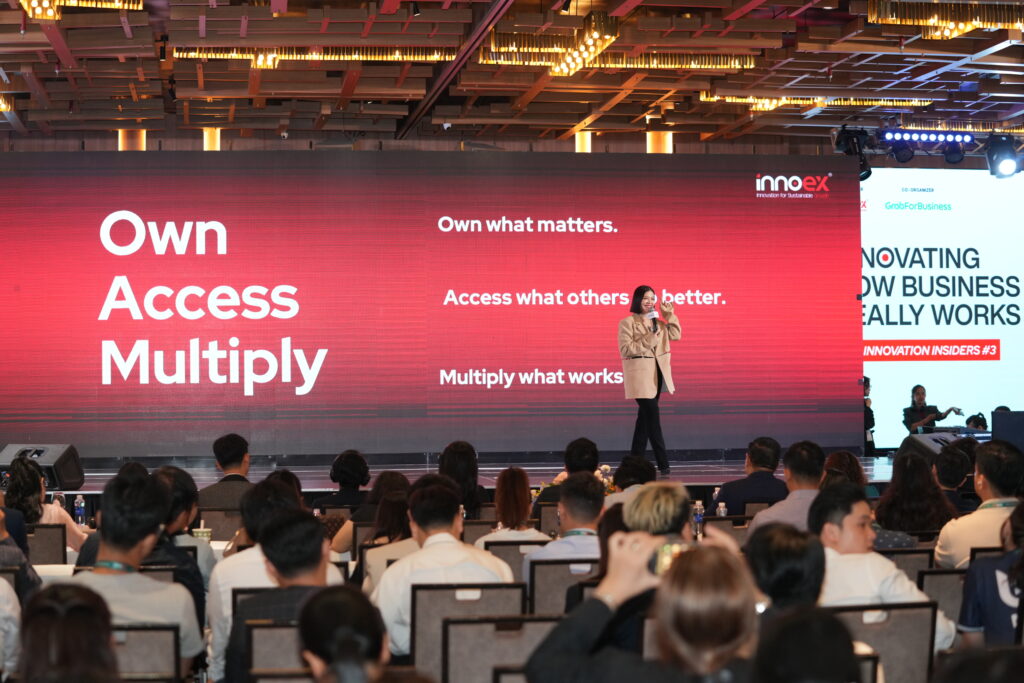
According to Ms. Hoang Phi, the next phase of Vietnam’s economy will be defined by four structural pillars: a private sector at the center; technology and innovation as the primary growth engine; business conduct grounded in legal compliance and transparent governance; and deepening integration into global markets. This demands that businesses not simply “do better” – but fundamentally change how they operate. Competitive advantage in this new game no longer comes from scale or speed of expansion, but from operational efficiency and internal execution capability.
The pressure intensifies as input costs from logistics and raw materials to labor continue rising under the influence of global economic volatility. Businesses that cling to bloated, suboptimal operating models will find revenue growing while margins erode. Against this backdrop, digital transformation has shifted from a long-term strategic option to a prerequisite for survival. The government has set targets of 60% of businesses adopting digital platforms and 40% using shared digital services, while accelerating the digitization of administrative processes such as taxation and business registration – making digital capability a mandatory baseline.
“The next game doesn’t just eliminate weak businesses – it eliminates outdated operating models. As the number of competitors grows and competitive space narrows, only organizations with genuine internal strength and superior execution capability will survive.”
Facing Reality: Bottlenecks Hide Inside the Operating Machine
The forum’s most substantive moment was the strategic panel discussion “Operating Better in a New Business Reality,” moderated by Ms. Nguyen Phi Van, Chairwoman of Go Global Holdings. Ms. Phi Van opened by naming a reality most leaders recognize but rarely address directly: a business can grow revenue and still not be certain it is profitable, because cash is quietly leaking through operational gaps. As she put it, “if we spend every day struggling with revenue and cash flow, we won’t have the mental bandwidth to discuss bigger plays like innovation or business model transformation.” The panel concluded that the greatest bottleneck rarely lies in the market – it lives inside the operating system itself.
Mr. Pakornkit Chanwanityotin – Senior Sales Director, ASEAN, Salesforce: Disconnected Data Is a Liability, Not an Asset
Mr. Pakornkit Chanwanityotin argued that the new business reality revolves around three axes: speed, experience and trust. The greatest pressure comes from customer expectations – customers no longer benchmark a business against its direct competitors, but against the best experience they’ve had anywhere. Meeting those expectations on a scale requires data to flow seamlessly.
“All of us want to serve customers well, but the biggest bottleneck is data silos. When data is fragmented, businesses lose the ability to act at the right moment – even when the insight exists somewhere in the system. The priority therefore is not to choose a technology, but to identify the right problem, then build a data foundation solid enough to turn insight into real action,” he noted. The implication: investing in CRM as a cosmetic upgrade to an old machine yield nothing. The right starting question is “Which customers are about to leave us, and what are we doing to keep them?” – and from there, build data capability around that concrete problem.
Ms. Erika Oktora – Regional Lead, Self-Serve Business, Grab For Business: Small Leaks Sink Great Ships
Ms. Erika Oktora, who led digitization programs at Google before joining Grab, illustrated the problem with vivid precision: “A small leak will sink a great ship.” The most dangerous operational gaps in SMEs are rarely large, visible cost lines. They are the small frictions accumulating daily – a multi-layer manual approval process, a business trip with no compliant receipt for reimbursement, a delivery order with no real-time tracking. Multiplied across hundreds or thousands of employees each month, those frictions become enormous hidden costs that appear in no report – yet silently consume real profit.
She walked through a typical expense reimbursement workflow: multiple manual steps, prone to error, consuming hours. The question she posed: when scaled to an entire workforce, how much organizational capacity is being wasted? Her answer was disarmingly simple: simplify the system, embed rules into technology to reduce human error, and free people to focus on growth. When that happens, managers stop second-guessing employees and start building the organization.
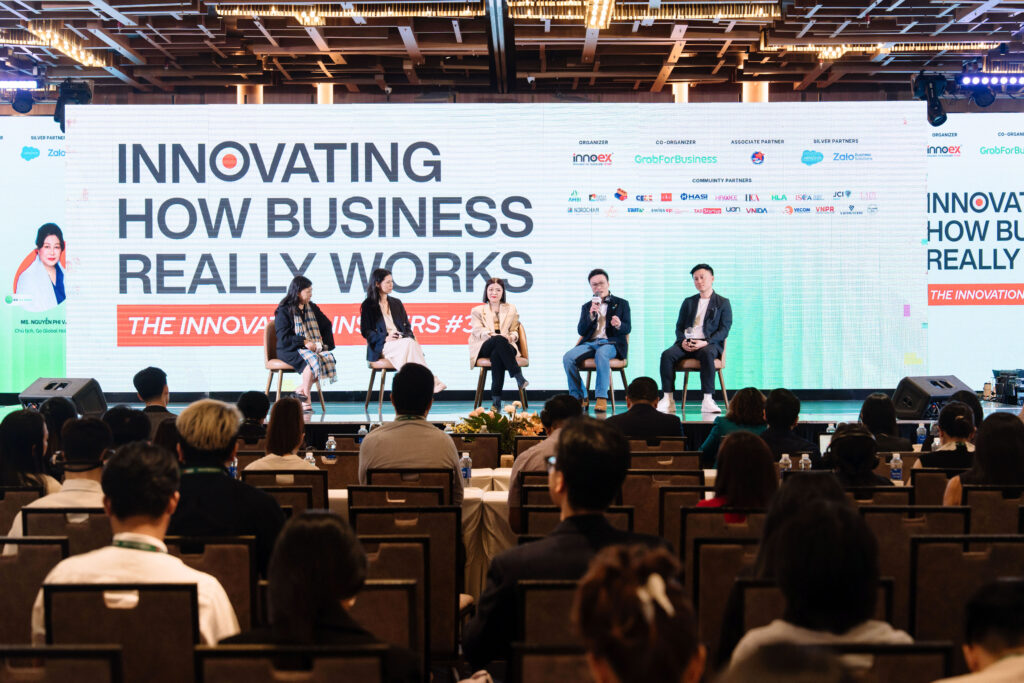
Mr. Khoi Le – Country Director, Meta VietNam: Constraints Are Also Opportunities
Mr. Khoi Le offered a more optimistic perspective on growth: “The challenges of this moment are also opportunities for breakthrough.” With the rapid advancement of AI – particularly autonomous agents such as the Business AI Agent on Messenger, that Meta recently launched – businesses can now scale and grow more efficiently than ever before. “As I sit here today, I have about five or six AI agent ‘colleagues’ working for me,” he said, highlighting that the role of the business operator is shifting from doing to training and directing agents. Rather than being constrained by finite resources, businesses that experiment with this new operating paradigm can simultaneously optimize operations and accelerate growth.

Five Action Strategies for Vietnamese Businesses to Operate Differently
Closing the panel, Ms. Truong Ly Hoang Phi delivered a structured action framework focused on helping businesses move from awareness to execution. She outlined five priorities that cannot be deferred:
- Redefine your growth model. Growth can no longer come from expansion alone. Going forward, it must come from creating new value – through products, data, deeper customer understanding or by moving up the value chain. Without changing how value is created, every effort to expand will simply increase costs rather than profits.
- Create a genuine experimentation zone inside the organization. A real corporate innovation lab – a space where ideas can be tested quickly, where failure is fast and learning is faster, insulated from short-term operational pressure. Critically, the value lies not just in the testing, but in the ability to take validated outcomes back into the core operating system and scale them.
- Restructure operations for leanness and data-driven decision-making. Businesses must audit how they currently operate, eliminate duplication, reduce dependence on manual processing and build decision systems grounded in data. The goal is not just cost reduction – it is higher decision velocity and quality, alongside stronger cross-functional coordination as the organization grows.
- Apply technology pragmatically and selectively. Rather than deploying technology because it is trending, focus on the specific points where technology can create clear, immediate impact: reducing costs, accelerating processing and improving decision quality. Technology is not the objective – it is the tool for solving specific operational problems.
- Change the way you lead. Every operational transformation ultimately fails without a corresponding shift in leadership. In this new era, the leader’s role is not to control more tightly, but to create conditions for the organization to operate more effectively. Competitive advantage lies not in tighter process control, but in faster decision-making, more effective delegation and better cross-functional coordination within a unified system.
Seeking solutions to help Vietnamese businesses lead in 2026
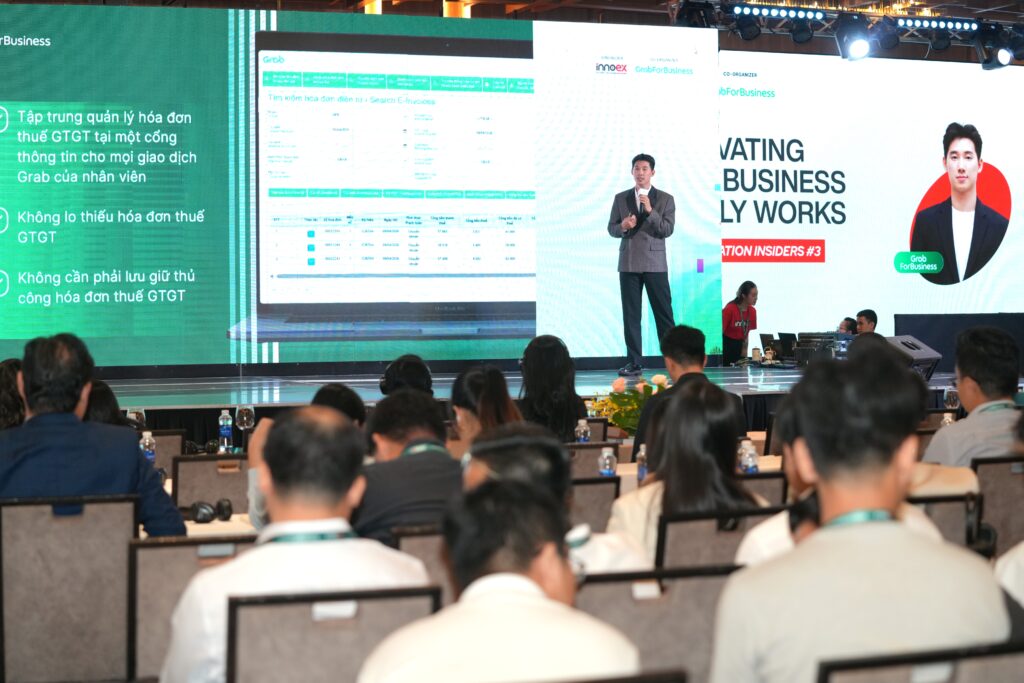
The forum extended beyond on-stage dialogue. Grab For Business served as the lead operational case study – a concrete example of how a business can transition from manual management to an efficient, flexible digital operating platform. The core message: digital transformation is becoming a strategic lever that breaks businesses free from the “manual operations trap,” where time and resources are consumed by cost-control processes and repetitive tasks. In a volatile economic environment, digitization not only reduces human-dependency risk – it accelerates growth and puts cost control in the hands of leadership from day one.
At the solution level, Grab For Business demonstrated a platform built to simplify the digitization of operations at low (or zero) cost, centered on three core values: ease of use, scalable flexibility and cost transparency. The platform enables businesses to automate spending controls, integrate directly into employees’ existing workflows, digitize accounting processes and access real-time management dashboards. Most importantly, operational data is converted into business intelligence – enabling sharper decisions and transforming operations from an overhead burden into a sustainable competitive advantage.
“Manual management is the silent ‘bottleneck’ eroding profits and limiting growth potential. Automating operational processes is not just about minimizing errors; it is about ensuring the business is ready to scale up without increasing the human resource burden.” – Mr. Than Manh Tan, Regional Strategy and Partnerships, Grab For Business
Zalo Business Solutions (ZBS) – the official enterprise solutions hub of Zalo – showcased its end-to-end deployment journey for businesses and technology partners. Serving more than 150,000 businesses of all sizes and sectors through a network of over 50 technology partners, ZBS focuses on helping Vietnamese businesses improve operational and business efficiency, enhance customer experience and expand opportunities for sustainable growth in the digital era.
Finan (So Ban Hang) addressed internal financial management – one of the most common “blind spots” among Vietnamese SMEs – with a comprehensive financial solution designed to optimize operations, improve cash flow control and strengthen financial governance transparency in the digital age.
Salesforce – the world’s #1 CRM platform – introduced Agentforce, which allows businesses to deploy intelligent agents across sales, service, marketing and operations. The platform’s mission is not to replace people, but to relieve them of repetitive tasks so they can concentrate on what truly creates value: strategic thinking, creativity and human connection.

Closing Message: Businesses Must Operate Differently
Across all perspectives shared at the forum, one message came through with unmistakable clarity: businesses cannot continue operating by the old playbook within a new set of standards. Scaling must be accompanied by efficiency. Operations must be systematized. Technology must be embedded into daily reality. And innovation capability must become part of the operating system – not an isolated initiative.
The next game has already been defined – not just by the market, but by the new operational standards being set at the national level. The question for businesses is no longer whether to change, but how quickly they can adapt – and how effectively they can operate to survive and advance in an environment that will only become more demanding.